Are you tired of feeling sluggish and unenergetic throughout the day? Do you struggle to keep up with your daily activities due to a lack of strength and flexibility? You’re not alone. Many of us are searching for a way to boost our energy levels and improve our overall well-being.
functional fitness routines, designed to enhance your body’s ability to perform everyday tasks with ease. By incorporating exercises that improve your strength, flexibility, and coordination, you can significantly boost your vitality and enjoy a more active lifestyle.
Key Takeaways
- Discover the benefits of functional fitness for enhancing daily life.
- Learn how to improve your strength and flexibility.
- Understand the importance of holistic fitness in achieving overall well-being.
- Explore simple exercises to boost your energy levels.
- Find out how to incorporate functional fitness into your daily routine.
Understanding Functional Fitness and Its Impact on Vitality
In the quest for vitality, understanding functional fitness is key to unlocking a more energetic you. Functional fitness is about training your body for the activities you perform daily, enhancing your overall vitality.
What Makes Fitness “Functional”?
Functional fitness is characterized by exercises that work multiple muscle groups simultaneously, improving coordination and balance. It’s about preparing your body for real-life movements, such as lifting, bending, or reaching.
“The goal of functional training is to help you perform your daily tasks with more energy and less risk of injury.”
Examples include squats, lunges, and deadlifts, which mimic daily activities and improve overall fitness for vitality.
The Connection Between Functional Movement and Energy Levels
Engaging in functional movements can significantly boost your energy levels. By improving muscle strength and enhancing cardiovascular health, functional fitness helps your body to be more efficient, reducing fatigue.
| Benefits | Description |
|---|---|
| Increased Muscle Strength | Enhances ability to perform daily tasks |
| Improved Cardiovascular Health | Boosts energy levels and overall health |
By incorporating functional exercise into your routine, you can experience these benefits firsthand, leading to improved overall health.
The Science Behind Functional Fitness for Overall Vitality
As we explore the science behind functional fitness, it becomes clear that this type of training has a significant impact on our overall health. Functional fitness is designed to improve our ability to perform daily tasks and movements with efficiency and effectiveness.
How Functional Training Affects Your Body Systems
Functional training affects multiple body systems, including the muscular, nervous, and cardiovascular systems. By engaging in exercises that mimic real-life movements, we can improve our coordination, balance, and overall physical function. This type of training also enhances our proprioception, or our body’s ability to sense its position in space.
- Improves muscle strength and endurance
- Enhances neuromuscular coordination
- Boosts cardiovascular health
Research-Backed Benefits for Long-Term Health
Research has shown that functional training can have numerous long-term health benefits, including reduced risk of chronic diseases, improved mental health, and enhanced overall well-being. Studies have also demonstrated that functional training can improve functional ability in older adults, reducing the risk of falls and improving quality of life.
By incorporating functional training into our fitness routine, we can experience these benefits firsthand and improve our overall vitality.
Assessing Your Current Fitness Level
To embark on a successful vitality journey, assessing your current fitness level is key. This initial step allows you to understand your strengths and weaknesses, setting the stage for a tailored functional fitness program that enhances your overall vitality.
Simple Self-Assessment Tests
Begin with simple self-assessment tests to gauge your current fitness level. These can include:
- Measuring your cardiovascular endurance with a 1-mile walk test
- Assessing your strength with push-ups or squats
- Evaluating flexibility through simple stretches
These tests provide a baseline from which you can measure progress.
| Test | Purpose | How to Perform |
|---|---|---|
| 1-mile walk test | Cardiovascular endurance | Walk 1 mile at a brisk pace, measure time |
| Push-up test | Upper body strength | Perform as many push-ups as possible |
| Squat test | Lower body strength | Perform squats, count repetitions |
Setting Realistic Goals for Your Vitality Journey
After assessing your fitness level, set realistic goals that are aligned with your vitality objectives. Consider what you want to achieve in terms of functional fitness and overall health. Ensure your goals are specific, measurable, achievable, relevant, and time-bound (SMART).
For example, you might aim to increase your walking distance or improve your flexibility within a certain timeframe. By setting clear goals, you’ll be motivated to stay on track and monitor your progress effectively.
Essential Functional Movements for Everyday Vitality
To boost your vitality, it’s crucial to incorporate essential functional movements into your daily routine. Functional training is a holistic approach to fitness that prepares your body for everyday activities, enhancing your overall quality of life.
Foundational Movement Patterns
Foundational movement patterns are the building blocks of functional fitness. These movements help improve coordination, balance, and strength, making daily tasks easier and less strenuous.
Squats and Hinge Variations
Squats and hinge variations are fundamental exercises that target multiple muscle groups. Squats work on your legs and glutes, while hinge movements, like deadlifts, engage your posterior chain. These exercises are essential for improving strength and mobility.
Push, Pull, and Rotational Exercises
In addition to squats and hinges, push, pull, and rotational exercises are vital for a well-rounded fitness routine. Push exercises, such as push-ups, strengthen your chest and shoulders. Pull exercises, like rows, target your back and arms. Rotational exercises improve your core strength and flexibility.
Bodyweight Exercises for Beginners
For those new to functional training, bodyweight exercises are an excellent starting point. Exercises like squats, lunges, and planks can be done anywhere and require no equipment. They help build a foundation of strength and endurance.
Progressing to Weighted Movements
As you become more comfortable with bodyweight exercises, it’s time to progress to weighted movements. Adding weights to your squats, lunges, and deadlifts increases the intensity and challenges your muscles further, leading to greater gains in strength and vitality.
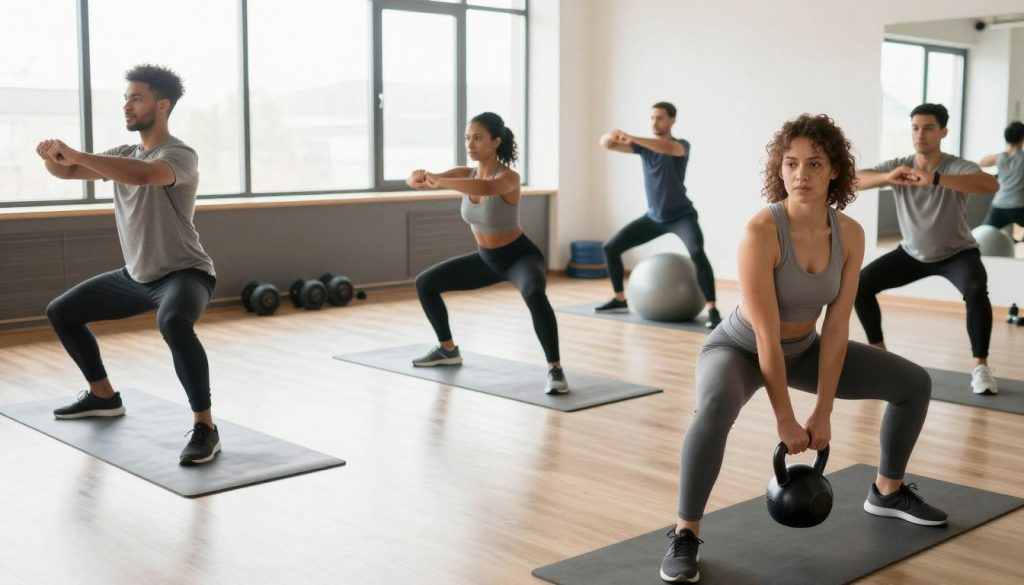
“Exercise is a celebration of what your body can do, not a punishment for what you ate.”
Incorporating these essential functional movements into your routine will not only enhance your physical health but also boost your overall vitality.
Creating Your 30-Day Functional Fitness Routine
Embarking on a 30-day functional fitness routine can be a transformative journey towards achieving overall vitality. This journey is not just about exercising; it’s about adopting a lifestyle that enhances your functional fitness for overall vitality and overall wellness.
Week 1-2: Building Foundations
In the first two weeks, focus on building a foundation with basic functional movements. Start with bodyweight exercises like squats, lunges, push-ups, and planks. These exercises will help improve your strength, flexibility, and coordination. Aim for 3 sets of 10-12 repetitions for each exercise.
Week 3-4: Increasing Intensity and Complexity
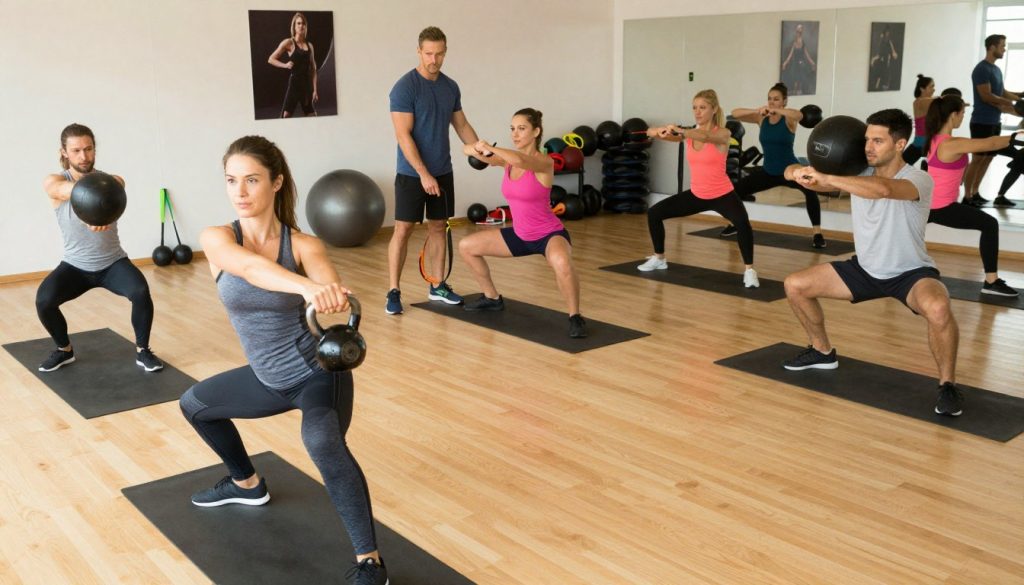
As you progress into weeks 3 and 4, it’s time to increase the intensity and complexity of your workouts. Introduce weighted movements and more challenging exercises like burpees, mountain climbers, or kettlebell swings. This will help enhance your functional fitness, making daily activities easier and improving your overall vitality.
Tracking Progress and Making Adjustments
Tracking your progress is crucial for staying motivated and making necessary adjustments to your routine. Keep a workout journal or use a fitness app to monitor your exercises, sets, and repetitions. Adjust the intensity and volume of your workouts based on your progress and how your body feels, ensuring you’re on track to achieving your wellness goals.
By following this 30-day functional fitness routine, you’ll not only improve your physical health but also enhance your overall vitality and functional fitness for overall vitality.
Functional Fitness for Overall Vitality: Specialized Routines
Specialized functional fitness routines offer a versatile way to improve your vitality by catering to different aspects of your health. These tailored approaches ensure that you can address specific needs, whether it’s starting your day with energy or unwinding after a long day.
Morning Energizer Routine
Begin your day with a morning energizer routine that includes dynamic stretches and mobilization exercises to increase blood flow and oxygenation. Examples include leg swings, arm circles, and torso twists. This routine prepares your body for the day ahead, enhancing your mental clarity and physical readiness.
Stress-Relief Functional Workout
A stress-relief functional workout focuses on exercises that release tension and promote relaxation. Techniques such as yoga-inspired movements, deep breathing exercises, and gentle cardio can help alleviate stress. This workout is designed to calm the mind and soothe the muscles, contributing to overall well-being.
Recovery-Focused Movements
Recovery-focused movements are essential for maintaining overall health. These exercises, including foam rolling, static stretches, and gentle mobilizations, aid in muscle recovery and flexibility. Incorporating these movements into your routine can reduce muscle soreness and improve your range of motion.
| Routine Type | Primary Benefits | Example Exercises |
|---|---|---|
| Morning Energizer | Increased energy, improved mental clarity | Leg swings, arm circles, torso twists |
| Stress-Relief | Reduced stress, enhanced relaxation | Yoga-inspired movements, deep breathing |
| Recovery-Focused | Improved recovery, increased flexibility | Foam rolling, static stretches, gentle mobilizations |
Nutrition and Recovery to Support Your Functional Fitness Journey
A well-rounded functional fitness routine is supported by two critical components: proper nutrition and adequate recovery. To achieve optimal wellness, it’s essential to understand how these elements work together to enhance your overall vitality.
Fueling Your Body for Optimal Performance
Nutrition plays a vital role in holistic fitness by providing your body with the necessary fuel to perform daily tasks and functional training exercises efficiently. A balanced diet rich in proteins, complex carbohydrates, and healthy fats is crucial. For instance, proteins are essential for muscle repair, while complex carbohydrates provide sustained energy.
Recovery Techniques to Enhance Vitality
Recovery is just as important as the exercise itself in a functional training regimen. Techniques such as adequate sleep, hydration, and stretching can significantly enhance your vitality. Incorporating rest days into your routine allows your muscles to recover, making them stronger over time.
By focusing on both nutrition and recovery, you can maximize the benefits of your functional fitness journey, leading to improved overall wellness and a more vibrant life.
Conclusion: Embracing Functional Fitness for Lifelong Vitality
As we’ve explored throughout this article, incorporating functional fitness into your daily routine can have a significant impact on your overall health and vitality. By focusing on movements that improve your ability to perform everyday tasks, you’re not only enhancing your physical capabilities but also investing in your long-term well-being.
Functional fitness for overall vitality is about more than just exercise; it’s a holistic approach to health that combines physical movement, nutrition, and recovery. By adopting this approach, you can experience improvements in your energy levels, mobility, and overall quality of life.
As you continue on your fitness for vitality journey, remember that consistency and patience are key. Celebrate your progress, no matter how small, and don’t be afraid to seek guidance from professionals or utilize resources from reputable fitness brands.
By making functional fitness a cornerstone of your lifestyle, you’ll be better equipped to tackle life’s challenges with energy and confidence. So, take the first step today, and start experiencing the benefits of functional fitness for overall vitality.